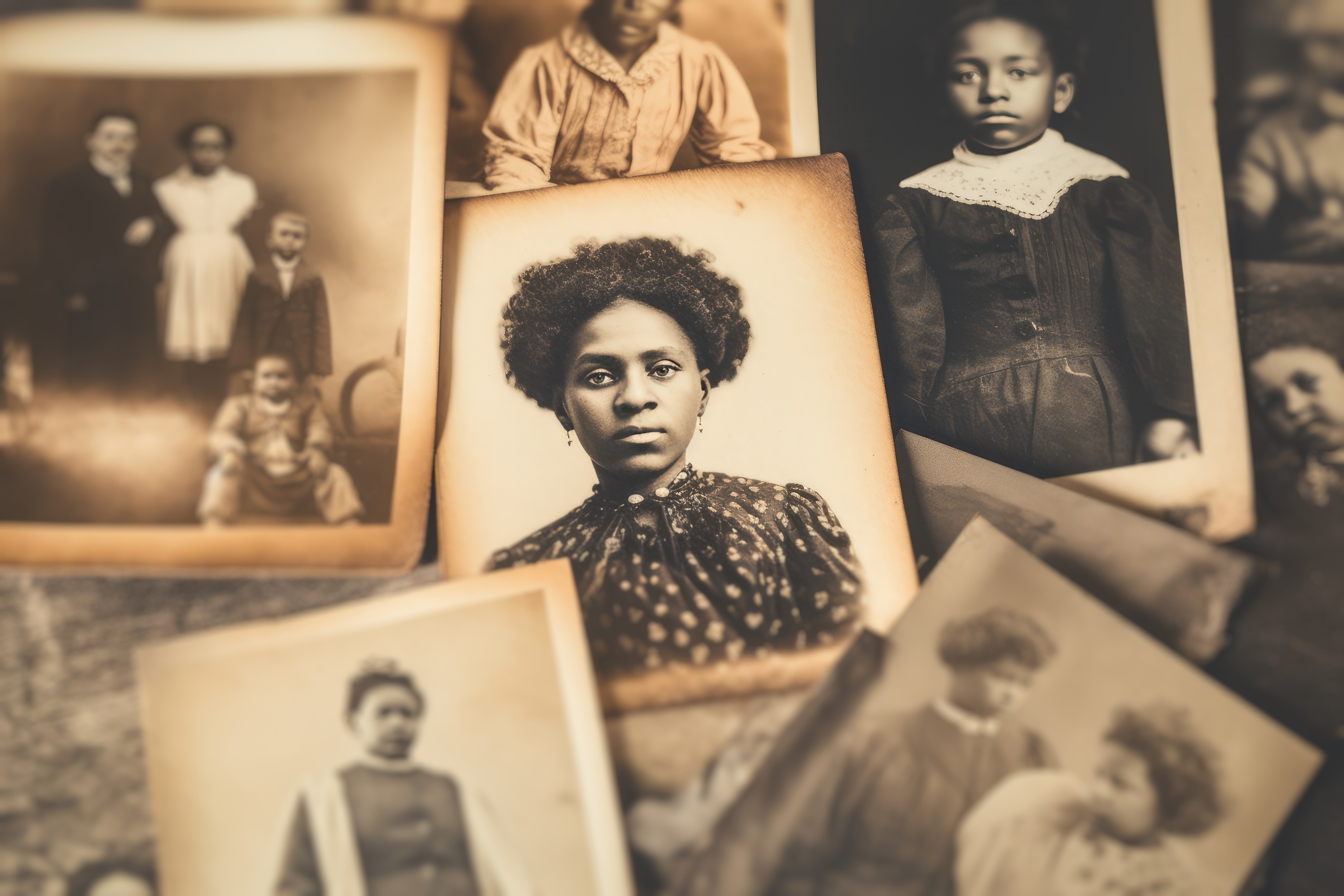
The Flexner Report: How 1910 Decided Who Counts as a Healer
Adapted from Chapter 1 of my upcoming book, Decolonize Your Healthcare (February 2027).
The comment always comes eventually. Sometimes it's a stranger online, sometimes a colleague, sometimes a patient's well-meaning relative. You're not a real doctor. Your school wasn't accredited. I have heard some version of it for twenty years.
For a long time, I carried it as shame. I don't anymore, because I finally understood where that definition of "real" came from. It was written in 1910, in a document most people have never read: the Flexner Report.
Two classrooms
I was eight, maybe nine, sitting in the back of an organic chemistry lecture. My mother had brought me to class again. Some days it was the lecture hall, some days the lab. My stepmother was a geneticist. My father was a teacher. In my family, school was everything, and I absorbed the scientific method before I knew it had a name.
But there was another classroom too. At home, I was learning my lineage: plant medicines, ceremony, ritual, the medicine wheel. Practices that had kept my people alive long before anyone wrote a textbook about them.
Even as a child, I couldn't understand why these two worlds were kept separate. Both were about understanding the body. Both were about healing. Yet one was called science and the other was called superstition.
Now I know. They were separated on purpose.
What was the Flexner Report?
In 1910, the Carnegie Foundation for the Advancement of Teaching published Medical Education in the United States and Canada, a survey of every medical school in both countries led by an educational reformer named Abraham Flexner. The American Medical Association had pushed for the study, and its message was simple: the country needed fewer and better doctors.
Fewer, yes. Better for whom?
The report set a new standard for what a "legitimate" medical school looked like: laboratories, university affiliation, expensive science-based training. Meeting that standard took money, and the money flowed through philanthropies like the Rockefeller-funded General Education Board. Schools without that backing closed.
What happened to Black medical schools
Of the historically Black medical schools operating in that era, only two survived the years after the report: Howard and Meharry. Black applicants were still barred from most white institutions, so those two schools carried the weight of training Black physicians for generations.
The cost is measurable. A 2020 study in JAMA Network Open looked at five Black medical schools that closed after the report. The researchers estimated that if those five schools had stayed open and grown, they could have trained between roughly 27,800 and 35,300 additional graduates by 2019.
Flexner didn't hide how he saw us. In the report's section on the medical education of Black Americans, he described the Black American as "a potential source of infection and contagion." Our health mattered to him mainly as a threat to white neighbors.
That is the foundation the modern definition of a "qualified" healer was built on.
What couldn't be owned had to go
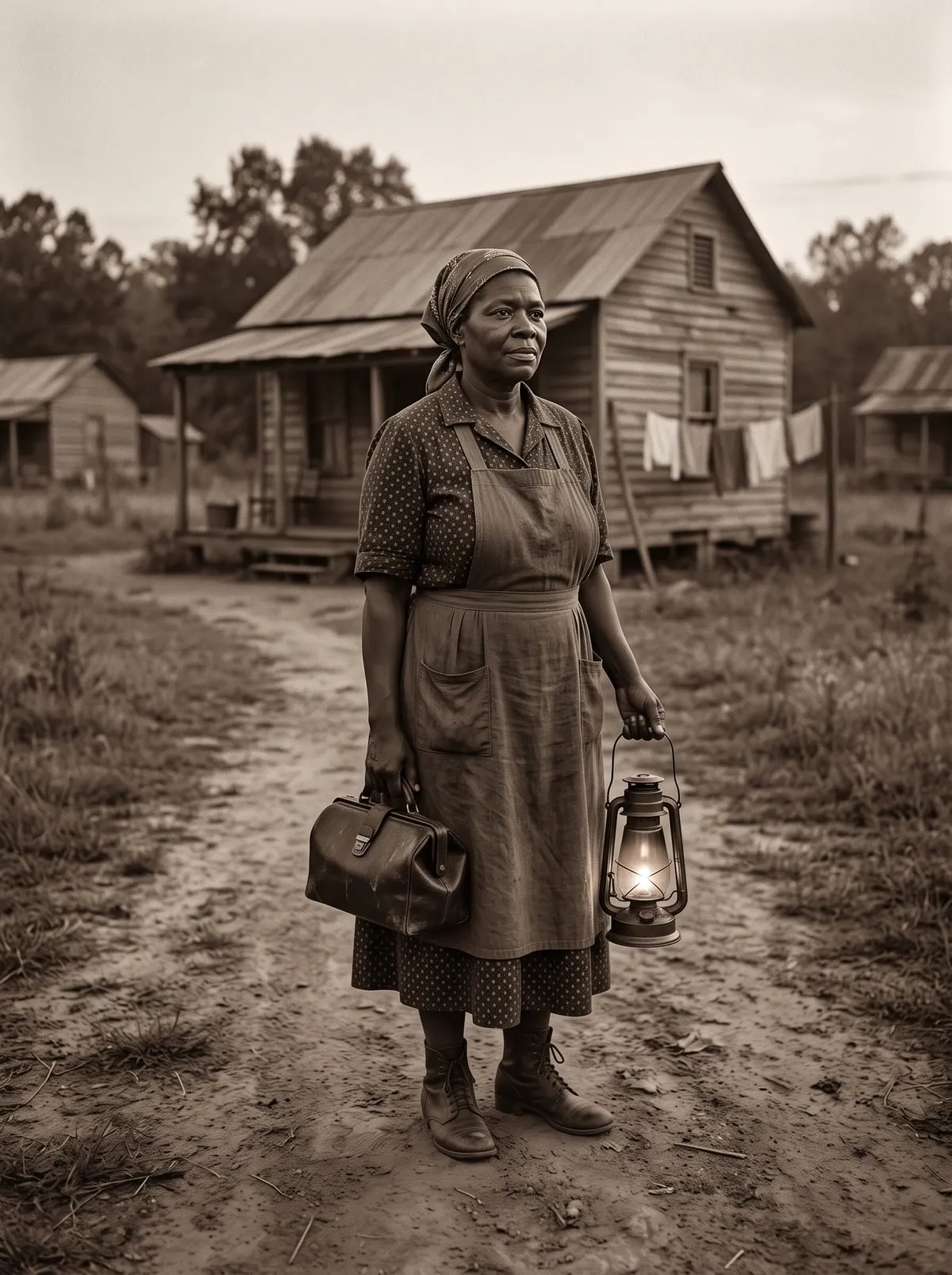
Here is what I want you to see. The traditions pushed out had one thing in common: midwifery, botanical medicine, root work, ancestral practice. None of it could be patented. None of it could be owned.
These traditions weren't pushed out because they were dangerous. In my view, they were pushed out because there was no profit in them.
Look at midwifery. Until the late 19th century, most births in this country were attended by midwives, many of them Black, Indigenous or immigrant women. In Virginia, where I'm from, an estimated 9,000 lay midwives were practicing when the state passed its first law regulating midwives in 1918. Those regulations, shaped in part by the white medical establishment's prejudice, effectively ended the traditional lay midwife. Health officials argued that removing Black midwives was the key to reducing Black maternal and infant deaths.
A century later, we know how that turned out.
What was lost
You'd be hard-pressed to find a Black family without a healer somewhere in its line. A midwife. A root worker. A grandmother who knew which plant to reach for.
My family is no different. I am a third-generation healer. We grew up around herbs and hot toddies, tobacco for prayer ties, white sage and palo santo for cleansing ourselves and our homes. Altars. Plant medicines as they were needed. Health was never just the physical body. It was the mind, the emotions, the spirit and the ancestors, all woven together.
It was a lifestyle, not a product.
A report decided which healers counted. Money decided which schools survived. Laws decided which midwives could still catch babies. Slowly, the knowledge that had kept our families alive was renamed superstition, then danger, then nothing at all. That's erasure: not just the loss of a practice, but the loss of the memory that there was ever another way.
Why this still matters in 2026
More than a century later, the first question people ask about a healer often isn't whether their care helps. It's whether the right institution approved them. That question has a history, and now you know it.
Decolonizing your healthcare isn't about rejecting conventional medicine. I use it, and I work alongside my patients' primary care doctors. It means looking at every tool, ancestral, conventional and Eastern, with clear eyes: how it works, when it fails, when to use it and when not to. Discernment instead of allegiance.
None of us chose this system. Not your grandmother, who was told her remedies were backward. Not your mother, who learned to stop asking questions in the doctor's office. Not you.
You didn't choose this system. It was chosen for you.
But what was chosen for you can be unchosen.
Keep reading with me
This is one piece of Chapter 1 of Decolonize Your Healthcare, coming February 2, 2027. I'm sharing more of the book, the history behind it and the conversations it starts inside my free community.
Join the free Holistic Lifestyle Community to get book updates first and talk about this history with people who are living it.
Ready to work on your own health with a practitioner who sees all of you? Book a Complimentary Wellness Visit.
References
Flexner A. Medical Education in the United States and Canada. Carnegie Foundation for the Advancement of Teaching; 1910. Background: Washington University Desegregation History, "1910: Flexner Report".
Campbell KM, Corral I, Infante Linares JL, Tumin D. Projected estimates of African American medical graduates of closed historically Black medical schools. JAMA Netw Open. 2020;3(8):e2015220. Read the study.
The Marshall Project. "The Black mortality gap and a century-old document." 2021. Read the article.
University of Virginia School of Nursing. "Black Midwifery's Complex History." Read the article.
National Museum of African American History and Culture, Searchable Museum. "Midwives: Tradition and Transition."
Muigai W. Framing Black infant and maternal mortality. Journal of Law, Medicine & Ethics. 2022.


Keep learning. Start healing.
Join the free Holistic Lifestyle Community for health courses, live Q&A with Dr. Steele, and people on the same path. Ready for care that sees all of you? Book a free discovery call.